DISTILLERY PROPSAL
The objective is to design a distillery that accommodates the production, processing, distribution, and consumption of distilled spirits. As an architectural parti, the program should inform the organization and character of the project by reinforcing an understanding of the site and exploring innovative architectural typologies and building systems. The design should also respond to the Southern California climate by integrating interior and exterior spaces through thoughtful use of landscape, shading, and passive environmental design strategies.
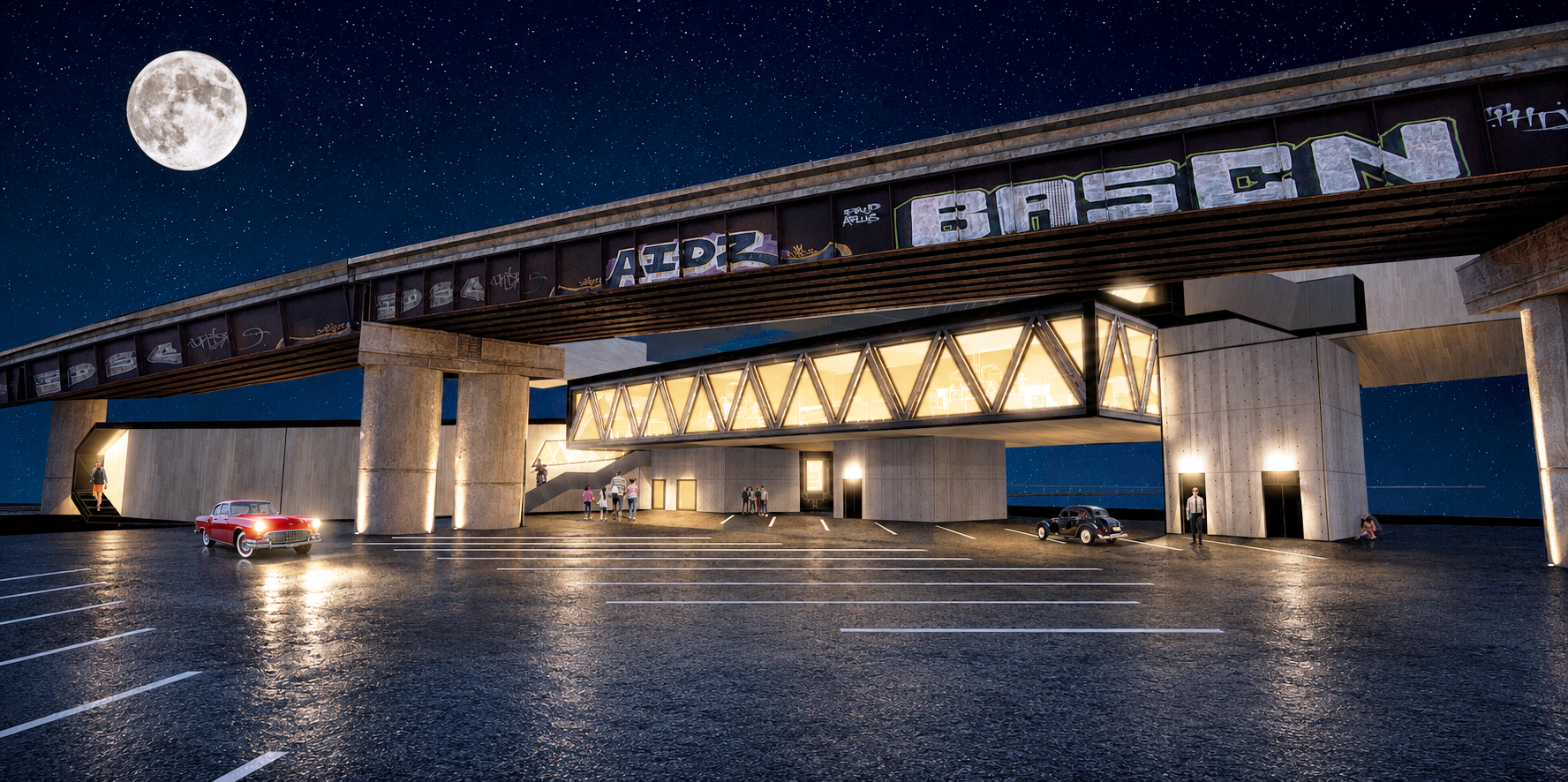
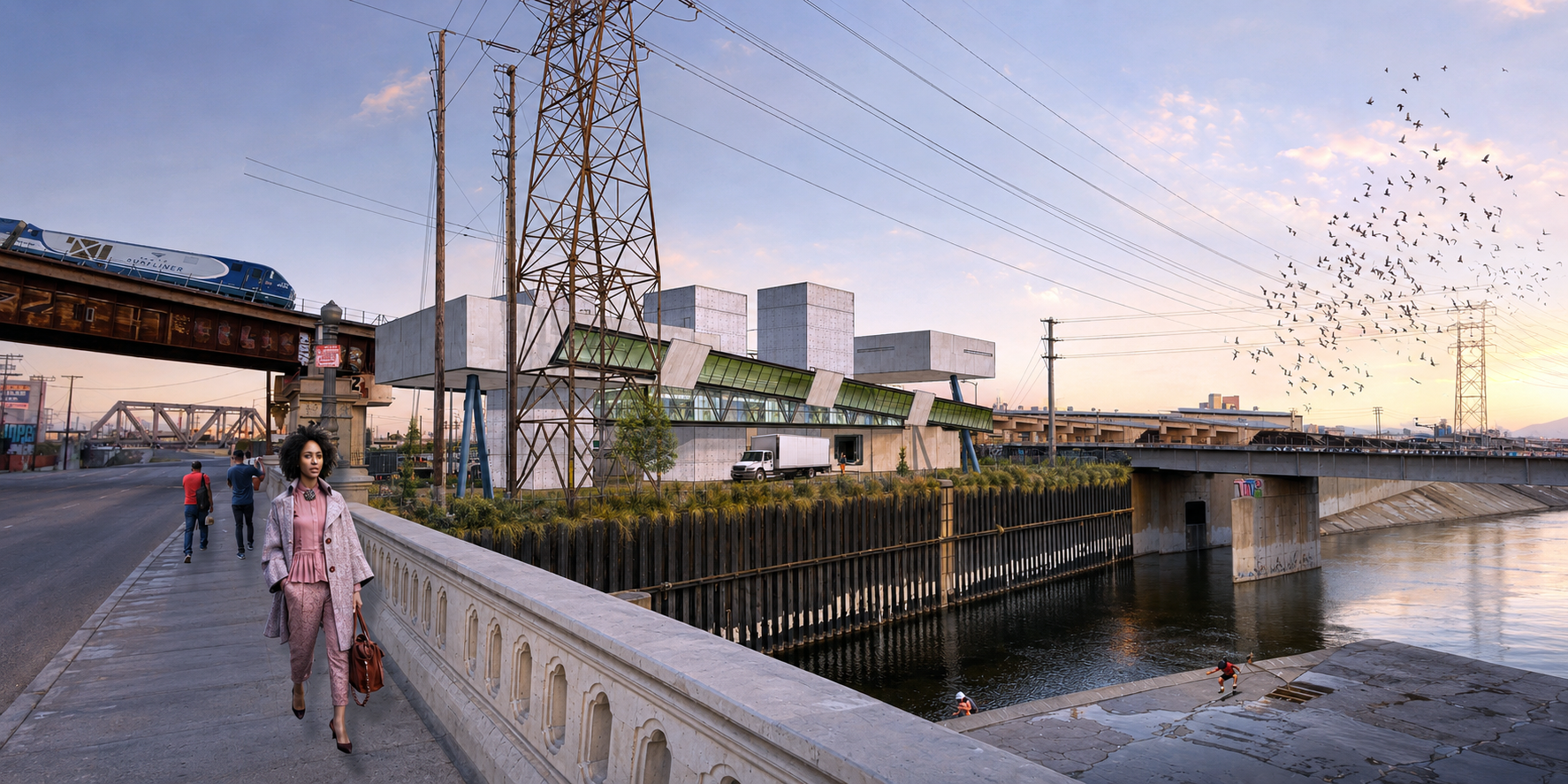
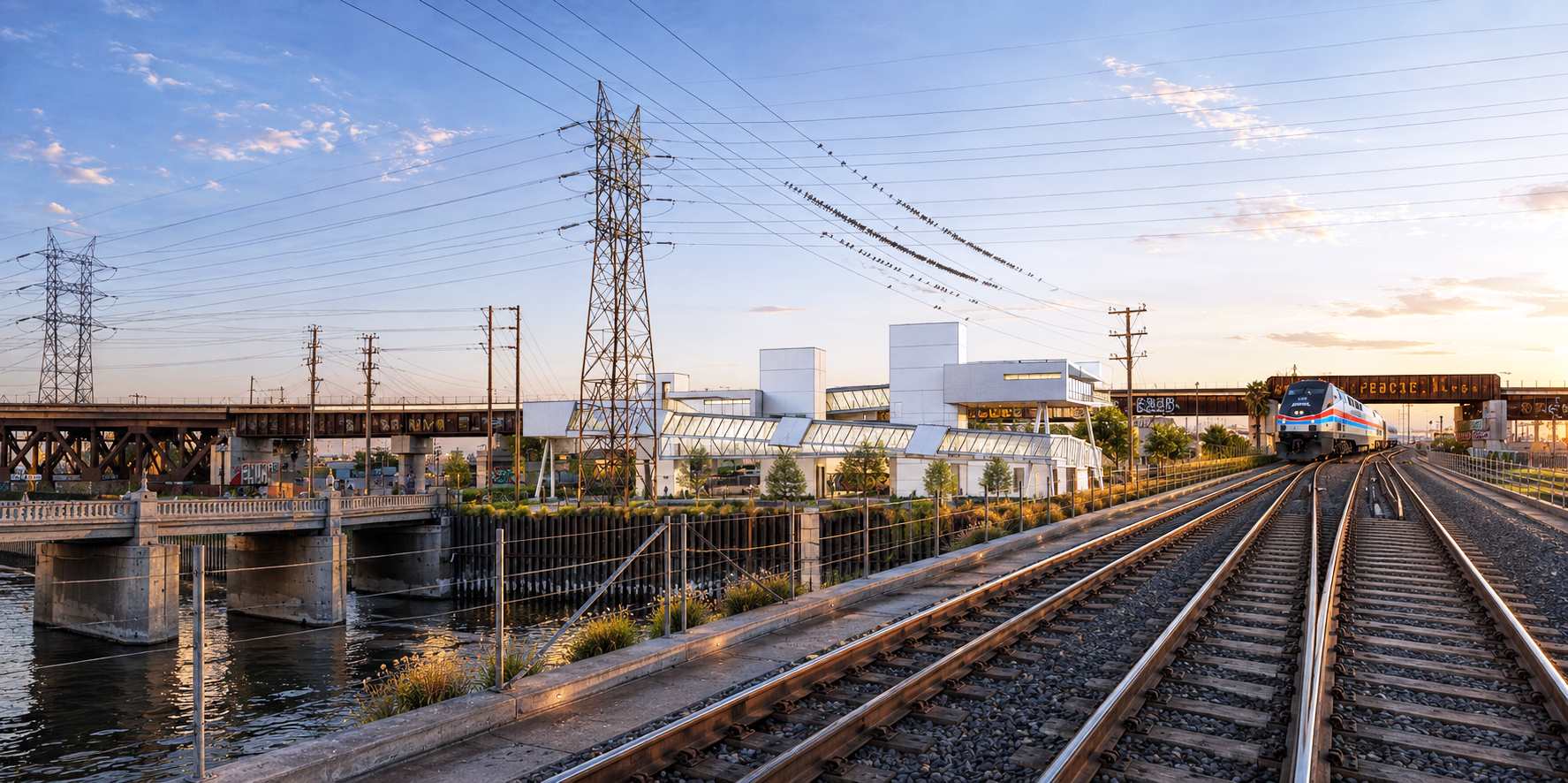
The site at 2649 E Washington Boulevard, Los Angeles lies in an industrial area bordered by key infrastructural elements—the Los Angeles River, an elevated train bridge, and a prominent power transmission tower nearby. These features strongly influence the architectural approach: the river and bridge define visual and spatial boundaries, introduce noise and vibration factors, and inspire structural expression, while the power tower imposes clear spatial and safety constraints on massing and orientation. In response, design strategies emphasize robust materials, careful site zoning, and views that engage with these infrastructural landmarks, transforming industrial limitations into a dynamic architectural dialogue between landscape, infrastructure, and built form.
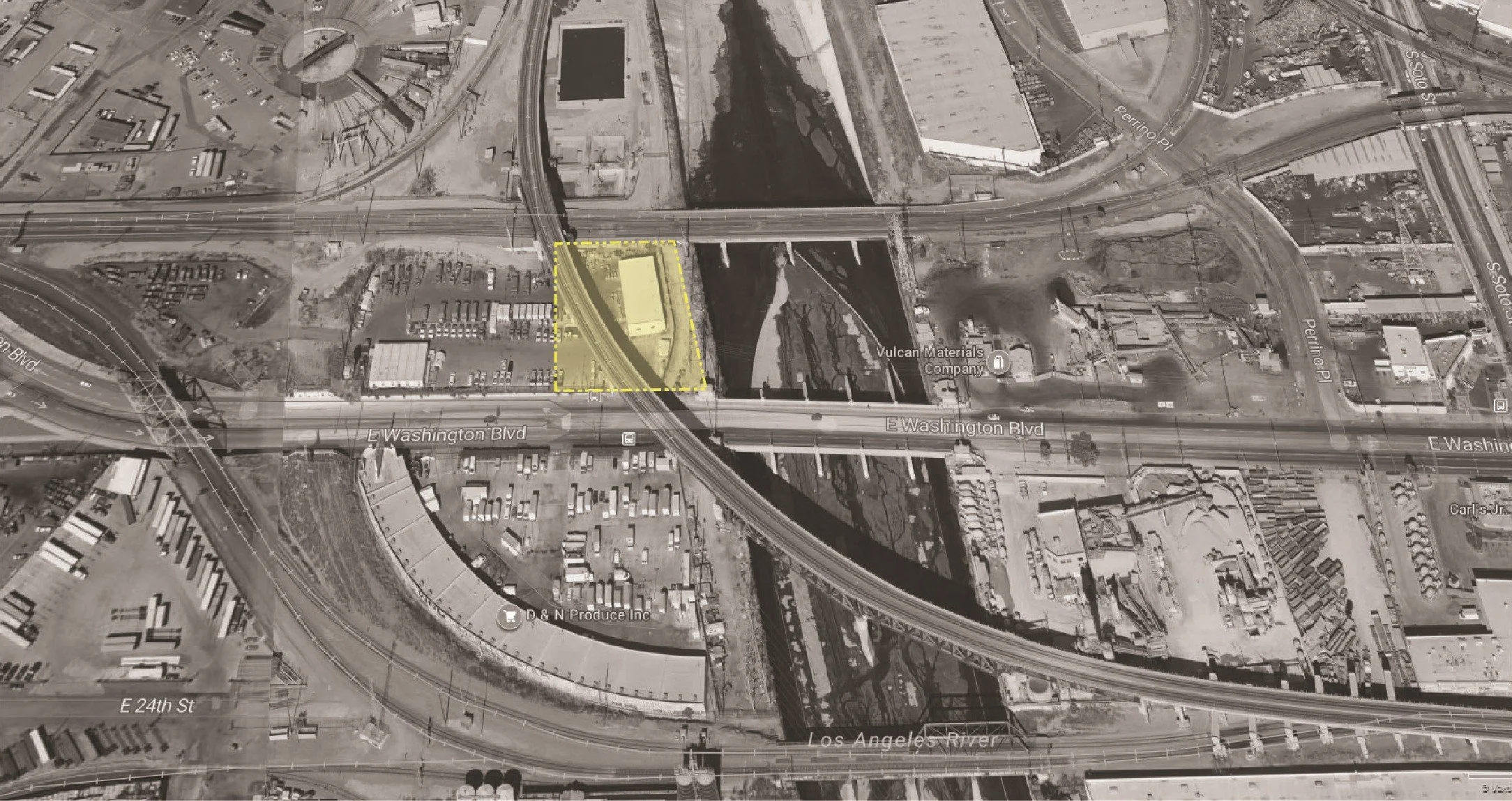
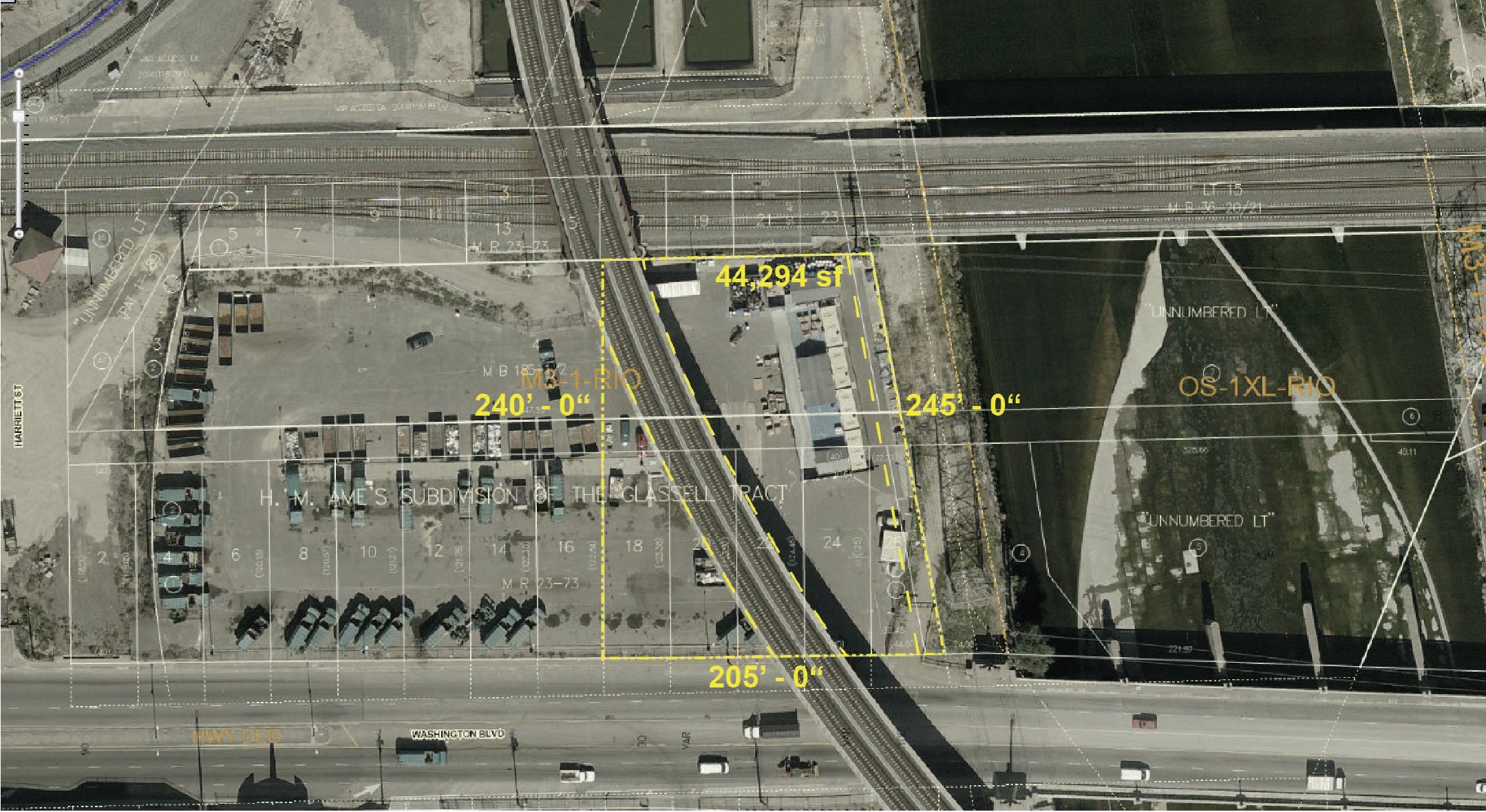
2649 E Washington Blvd Los Angeles, CA 90021
Site Analysis
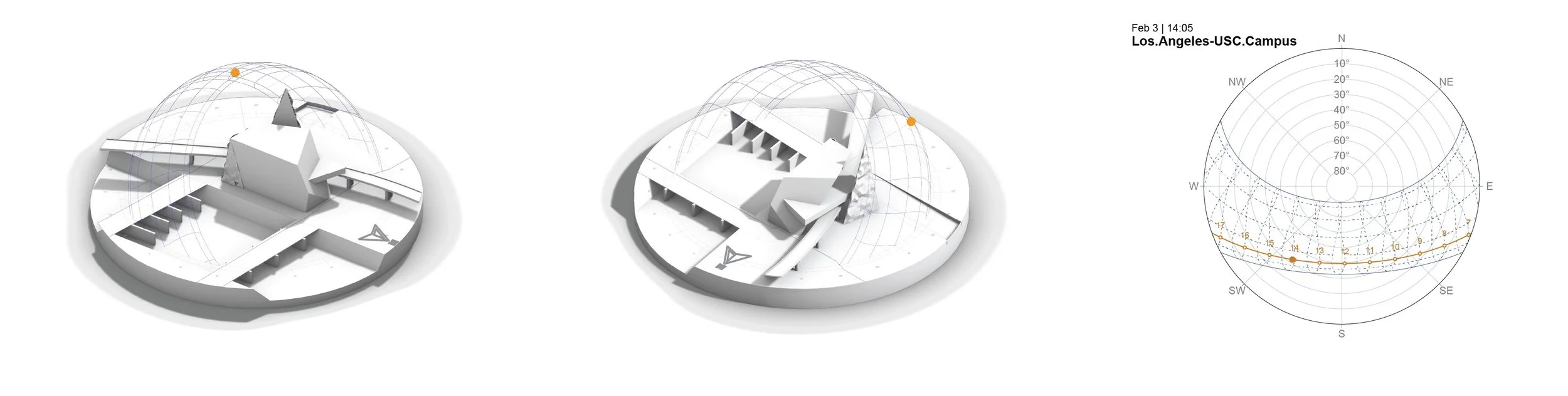
This diagram illustrates the sun path analysis for the Los Angeles USC Campus. It shows how solar angles and trajectories change throughout the year, providing insight into sunlight exposure and shading patterns for optimal building orientation and daylight design.
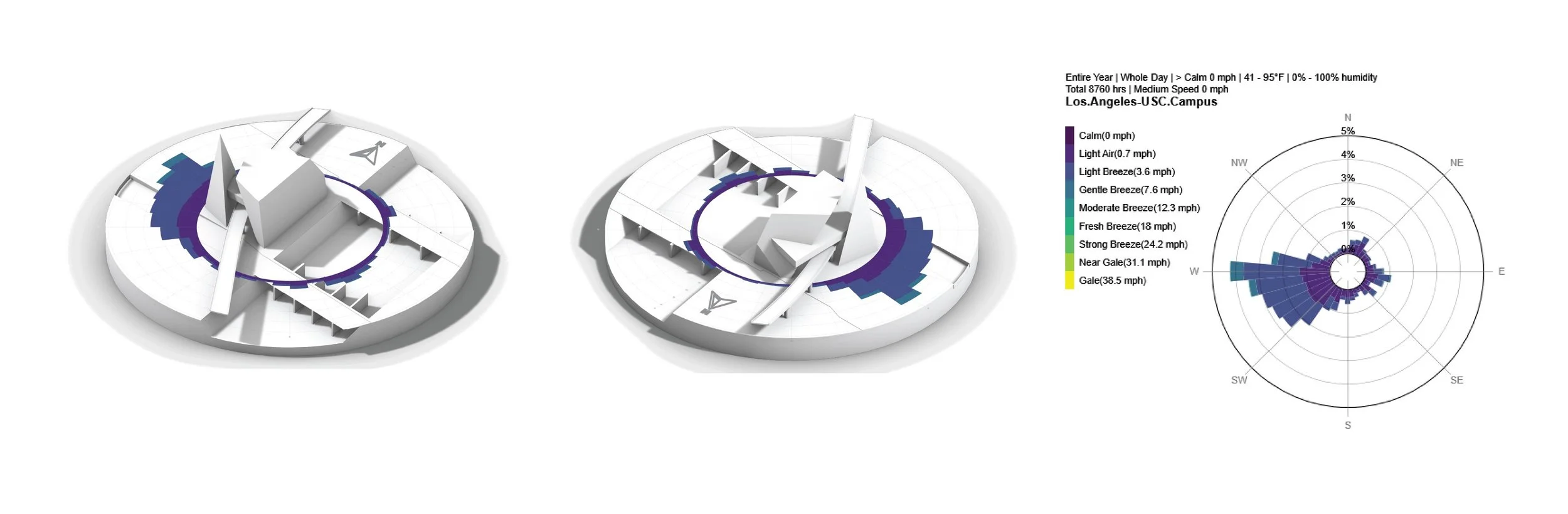
The wind analysis visualizes prevailing wind directions and speeds across the year. At the Los Angeles USC Campus, dominant winds come primarily from the west, indicating ideal orientations for natural ventilation and outdoor comfort optimization.
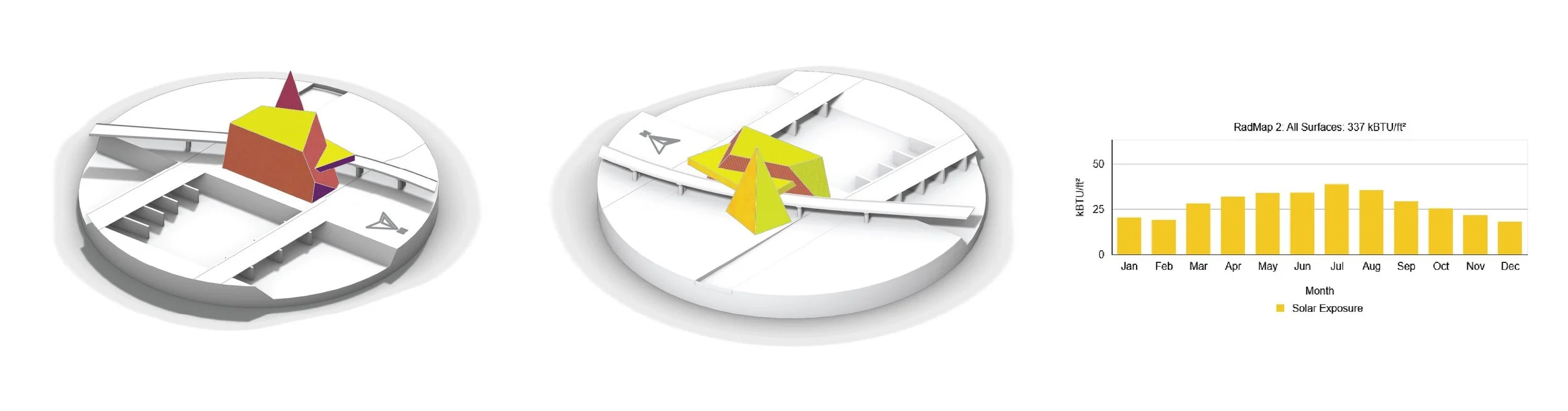
Heat (Solar Exposure) diagram represents the annual solar exposure on building surfaces, measured in kBTU/ft². It highlights how solar gain varies by month, peaking in summer (June–August) and decreasing in winter, informing façade design and shading strategies for thermal efficiency.
Program Diagram
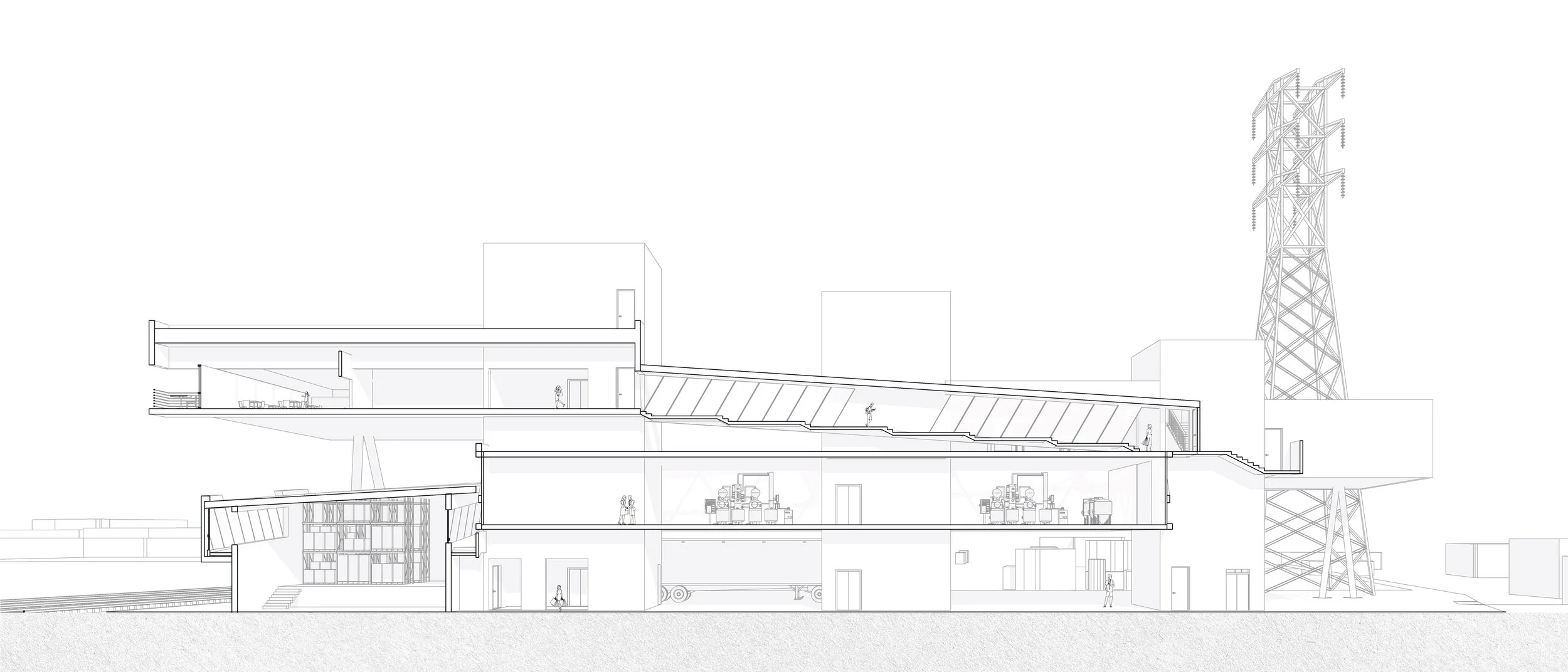
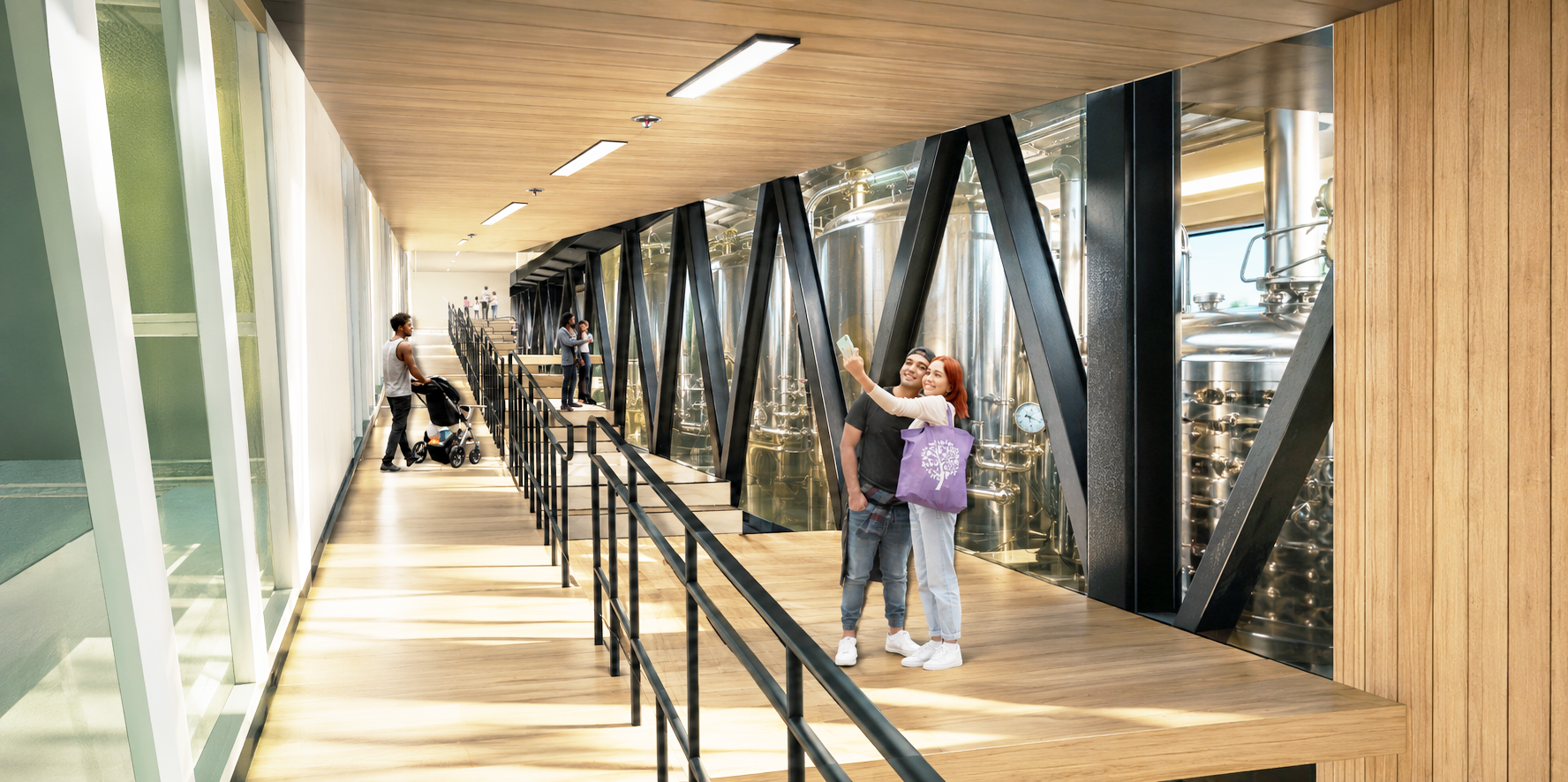
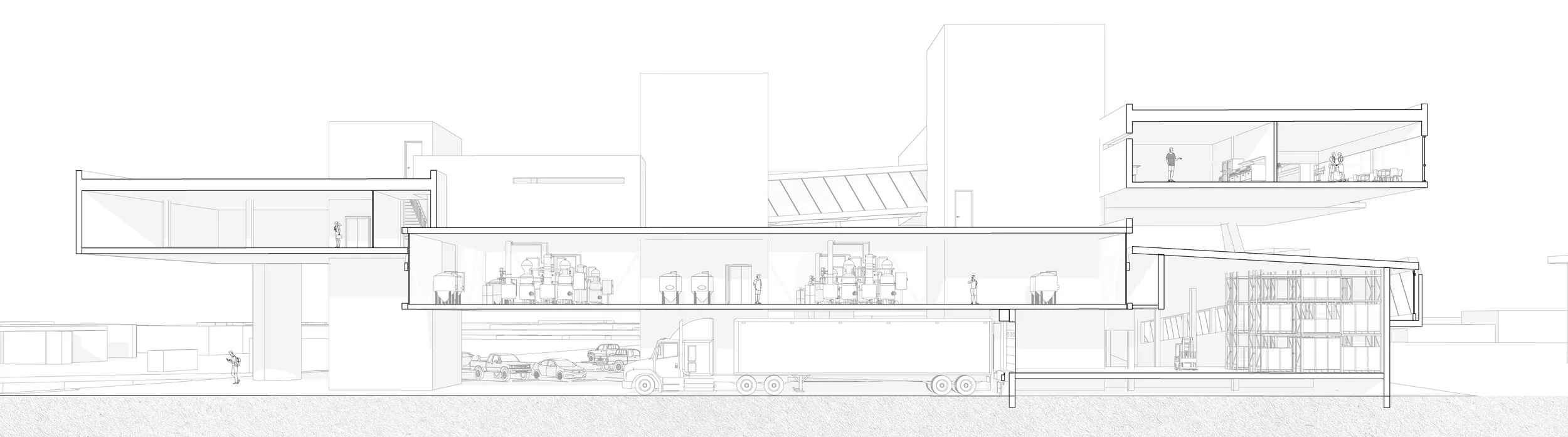
The design concept for the Cognac facility is rooted in the desire to seamlessly lead visitors through the different phases of production, creating a harmonious and engaging environment. The response to the assigned program is structured around four key stages: fermenting, distilling, ageing, and bottling. Each stage is carefully considered and integrated into the overall design, ensuring a cohesive narrative that captures the essence of Cognac-making.
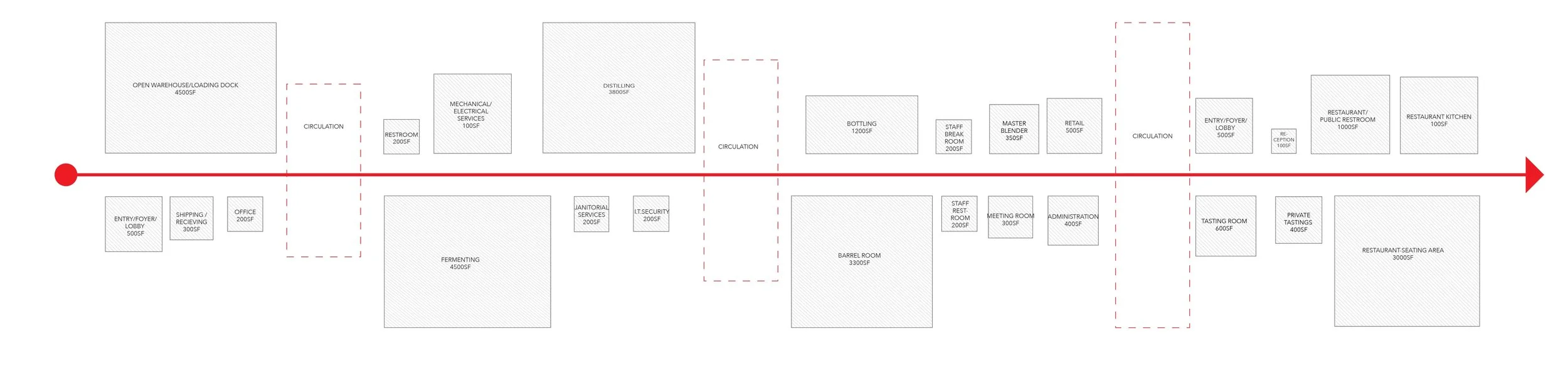
The intricate process of crafting Cognac is an art form that involves a meticulous series of steps, each contributing to the creation of this exquisite spirit. From the initial distillation of wine to the aging process in oak barrels, Cognac production is a journey that transforms raw ingredients into a refined, colorless fruit brandy. The story of Cognac unfolds through a visually captivating experience, guiding visitors from the production stages to the ultimate consumption of this luxurious beverage.

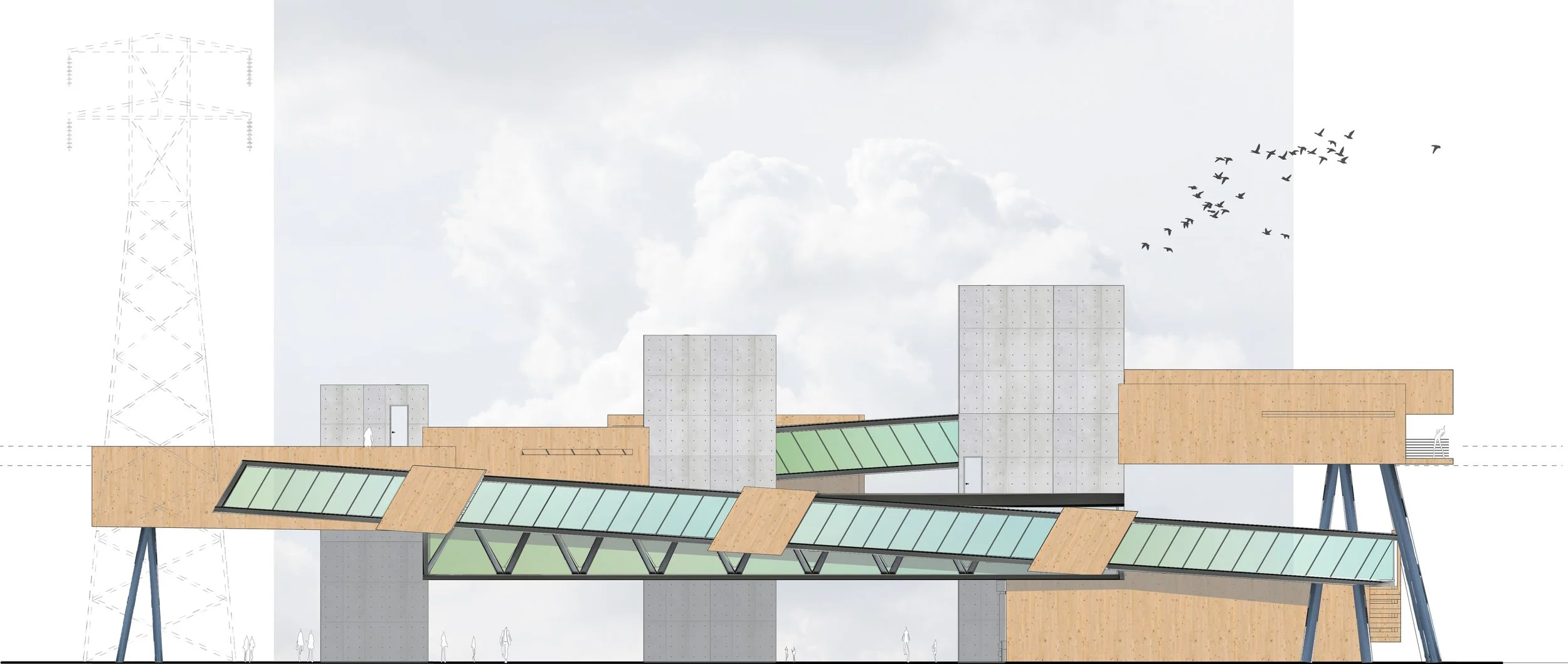
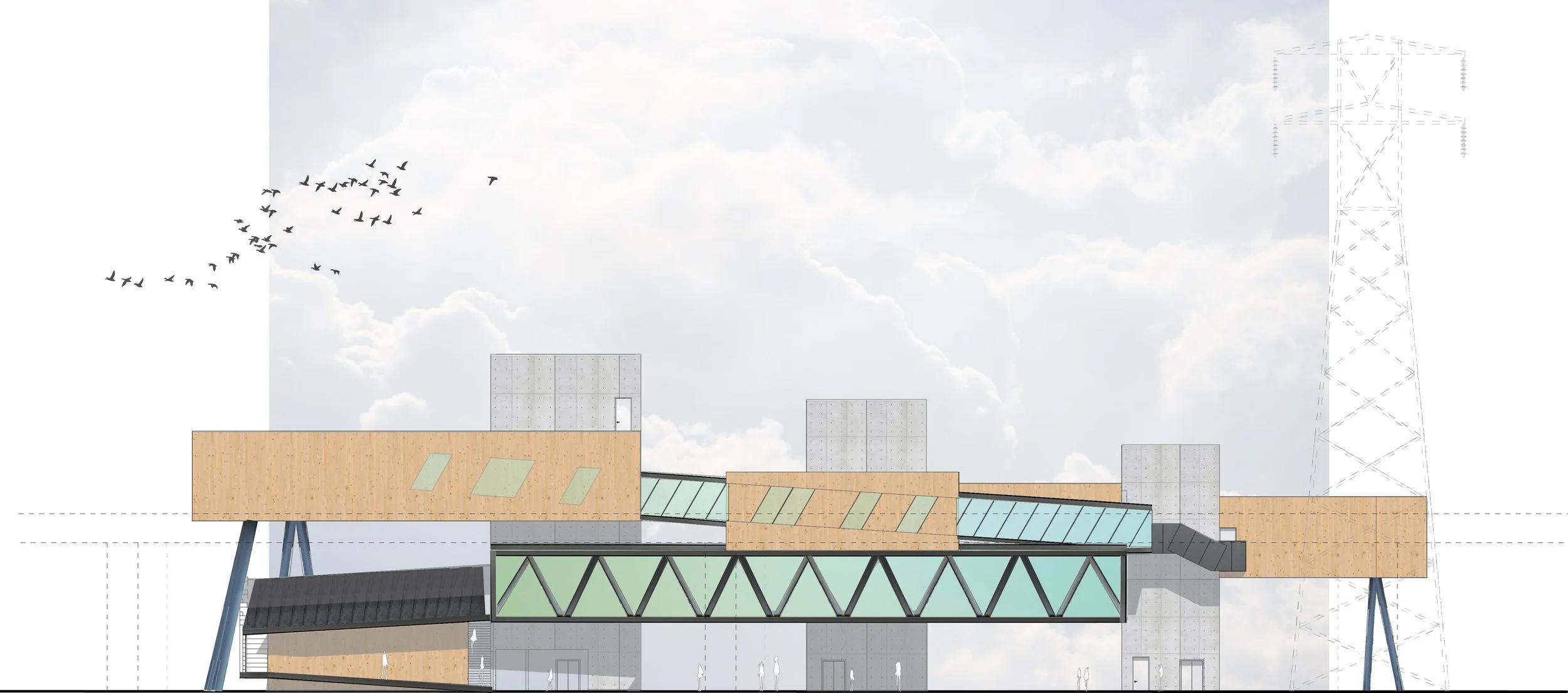
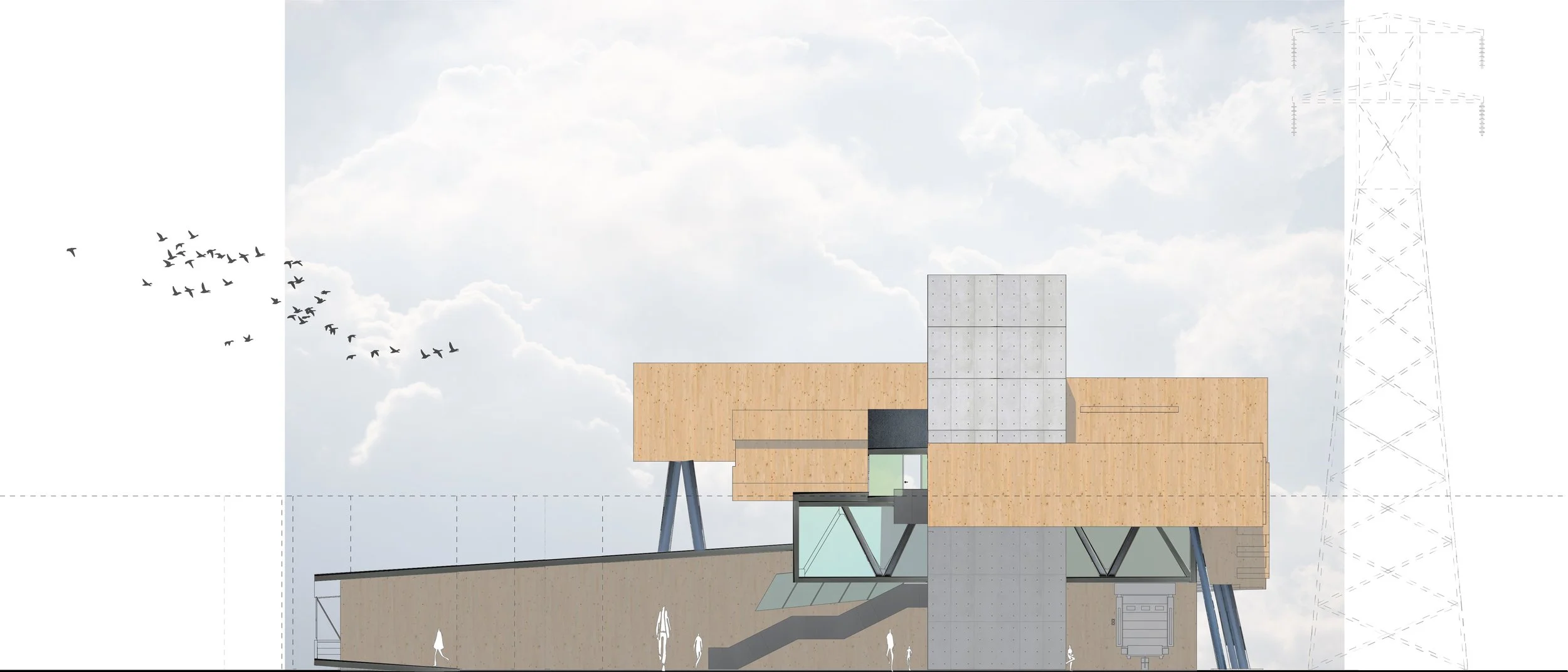
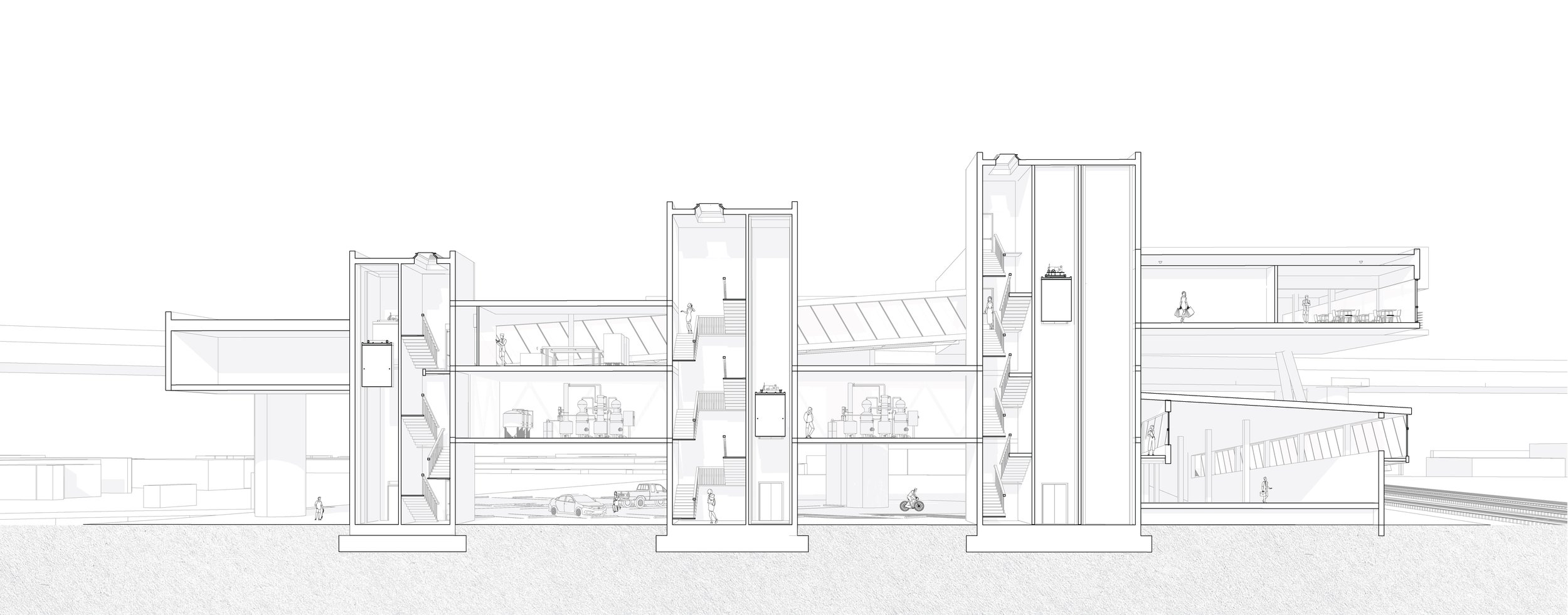
Section 1-1
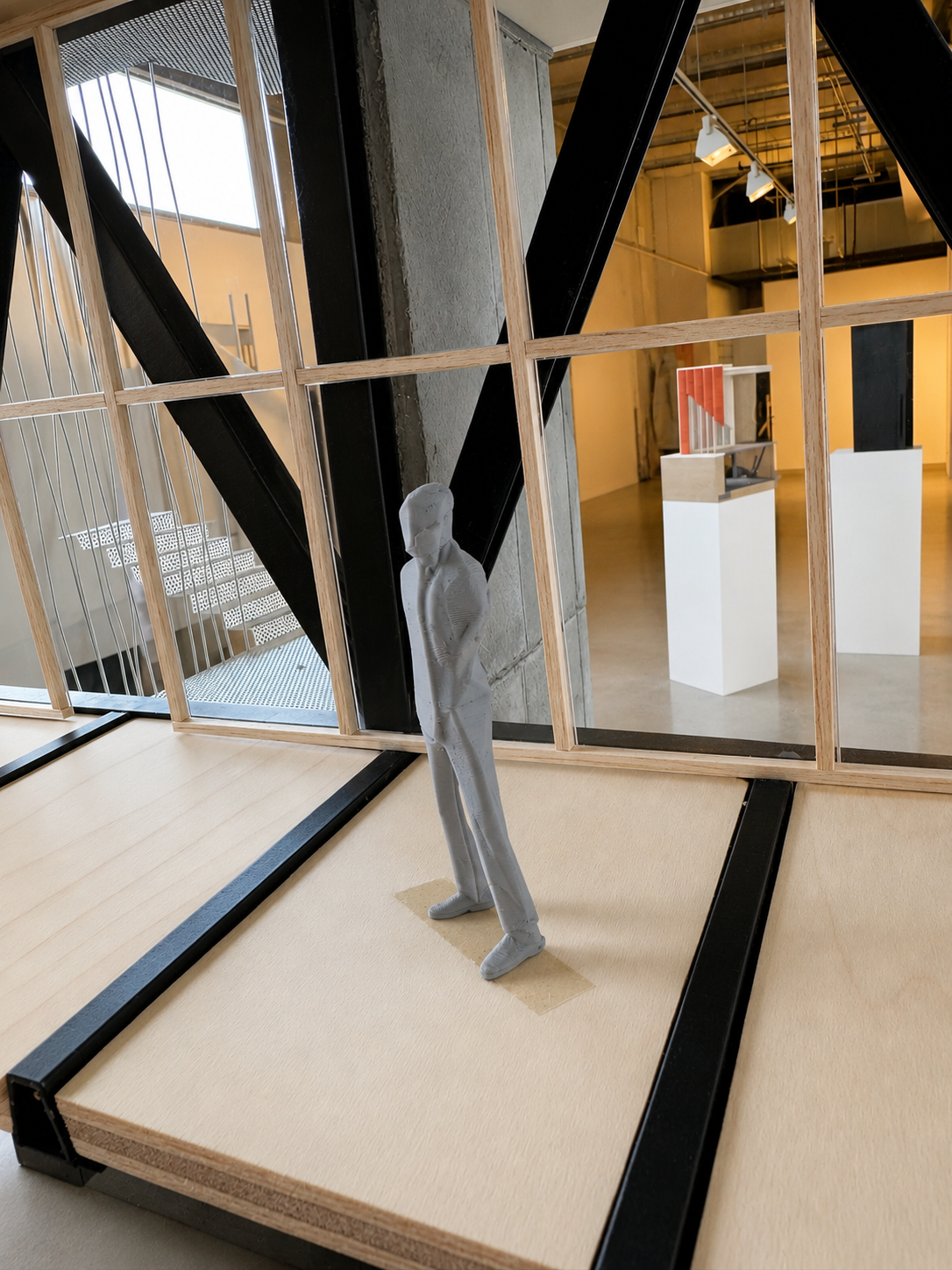
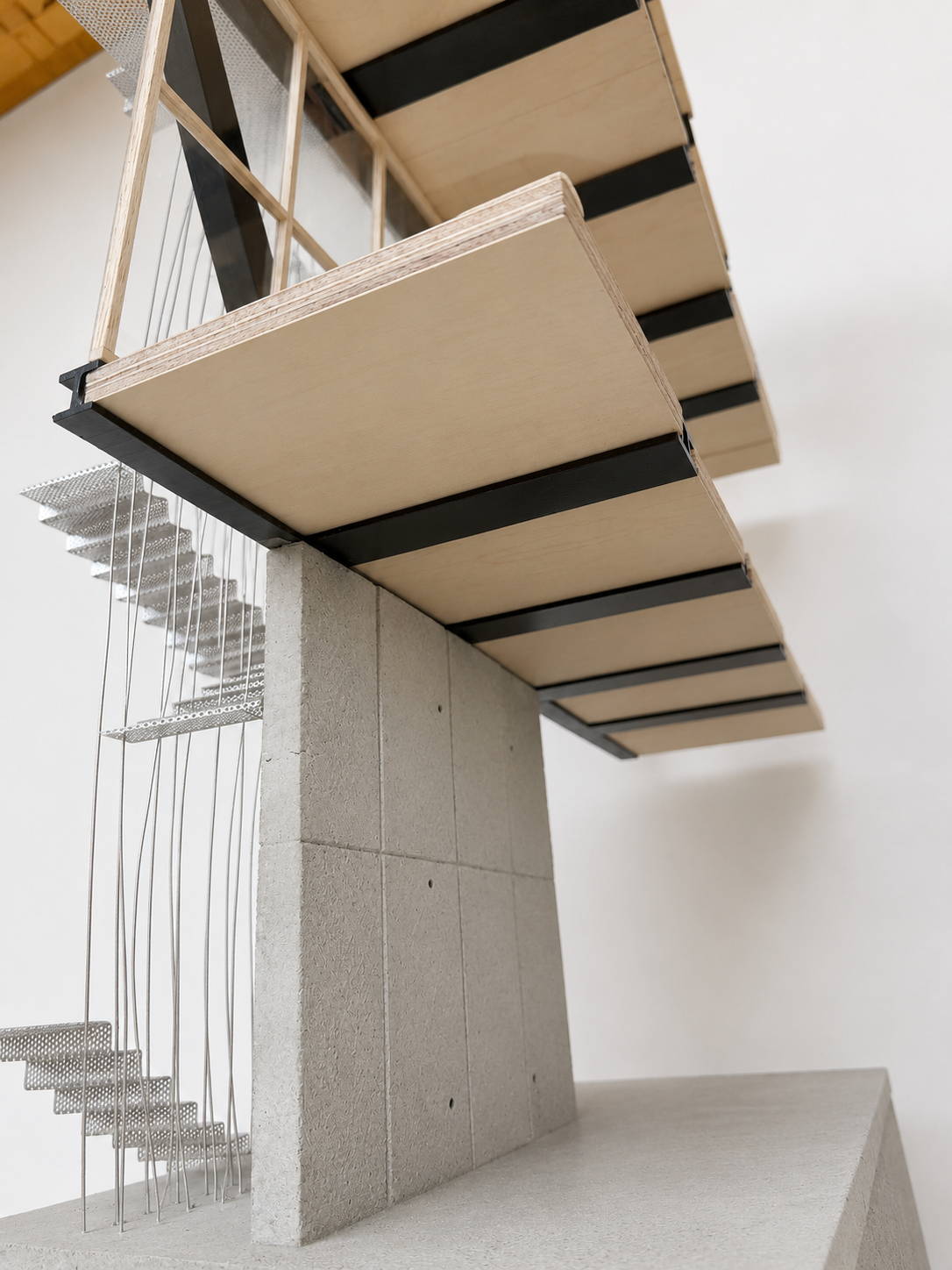
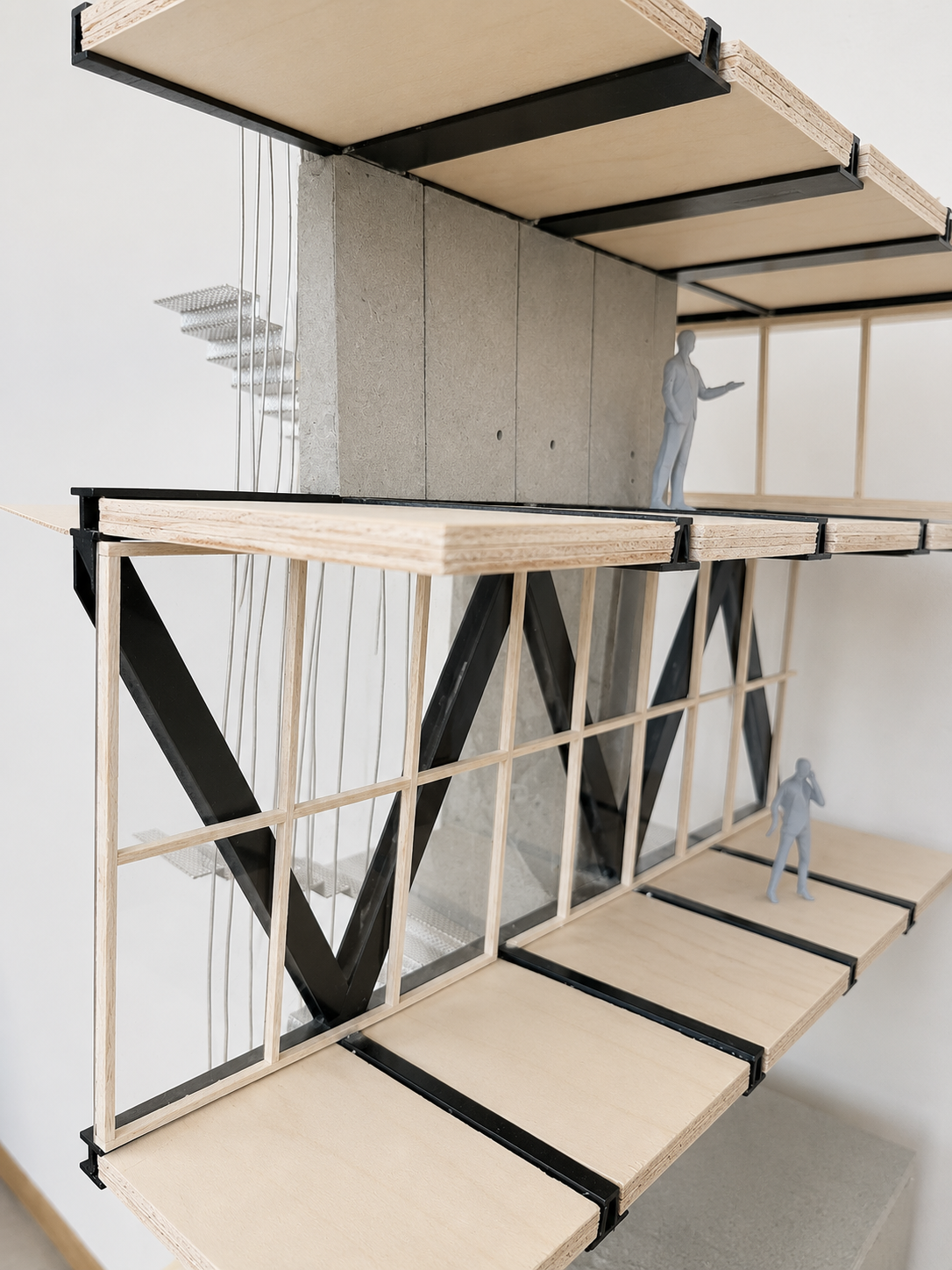
PHYSICAL MODEL
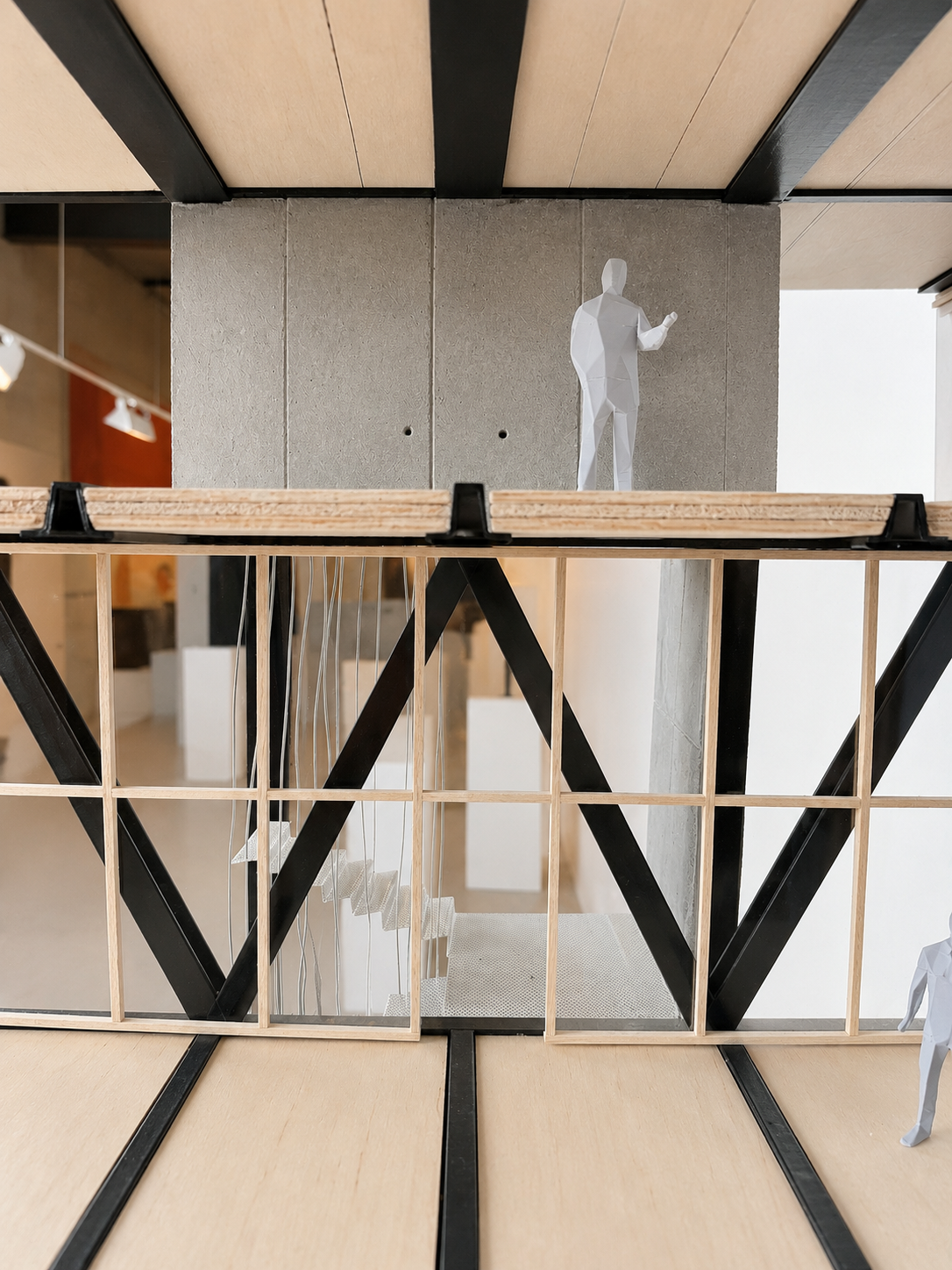
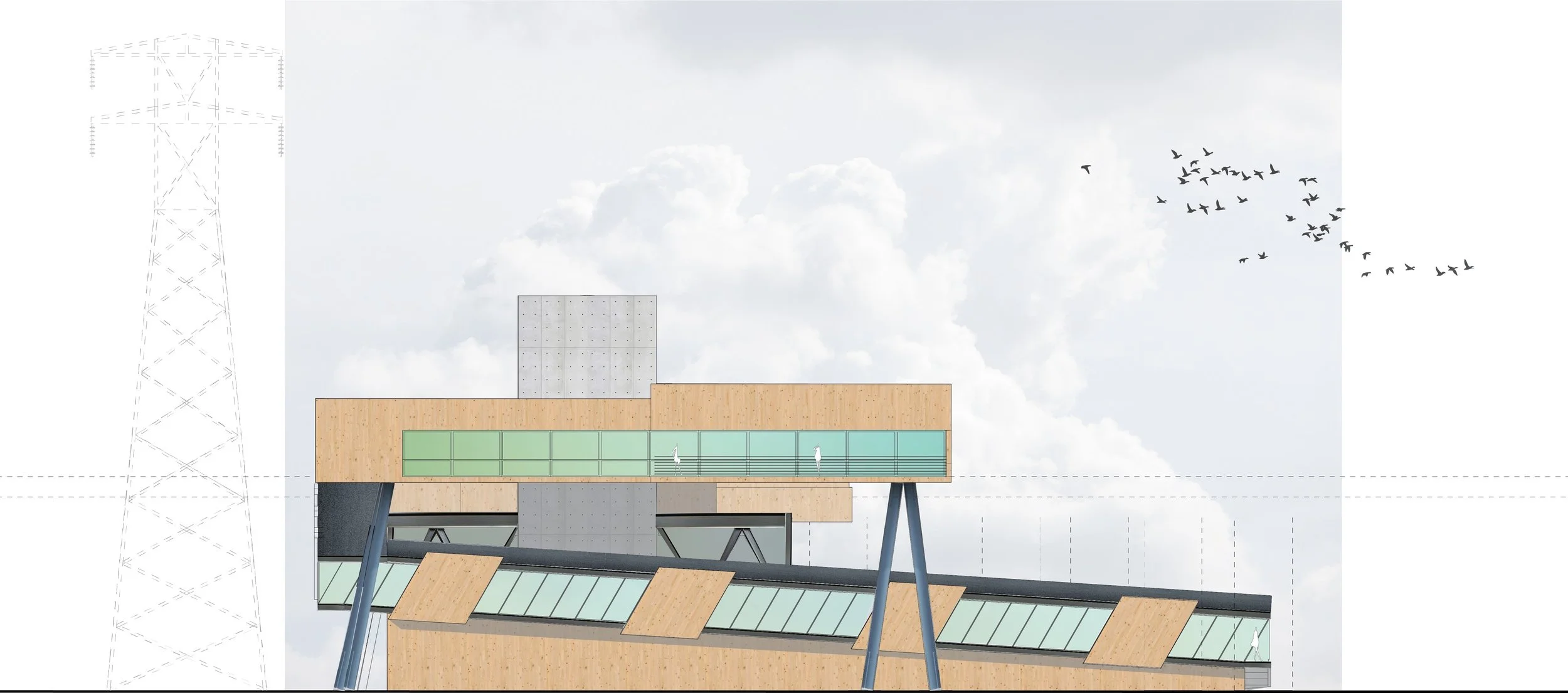
Section 2-2
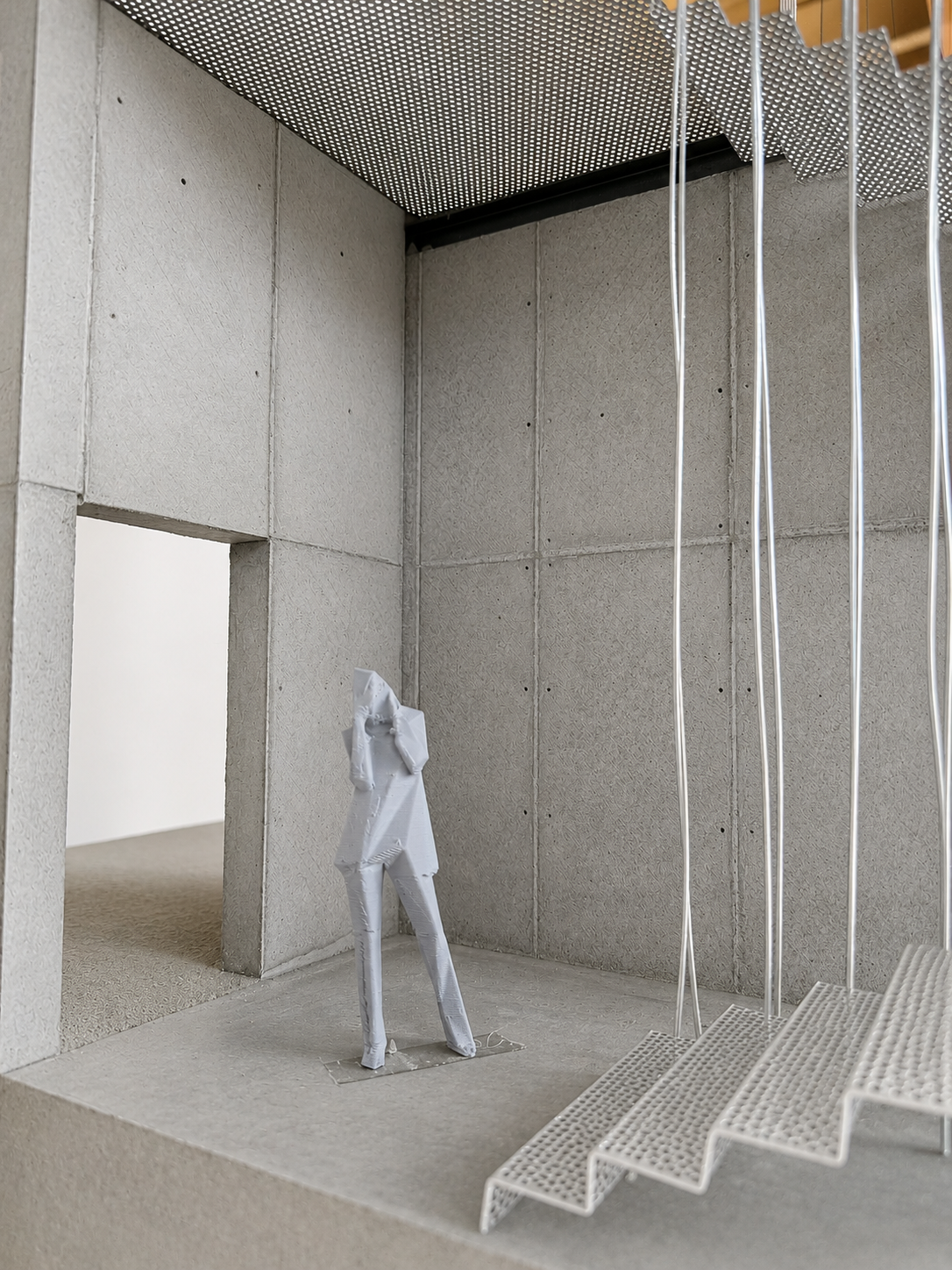
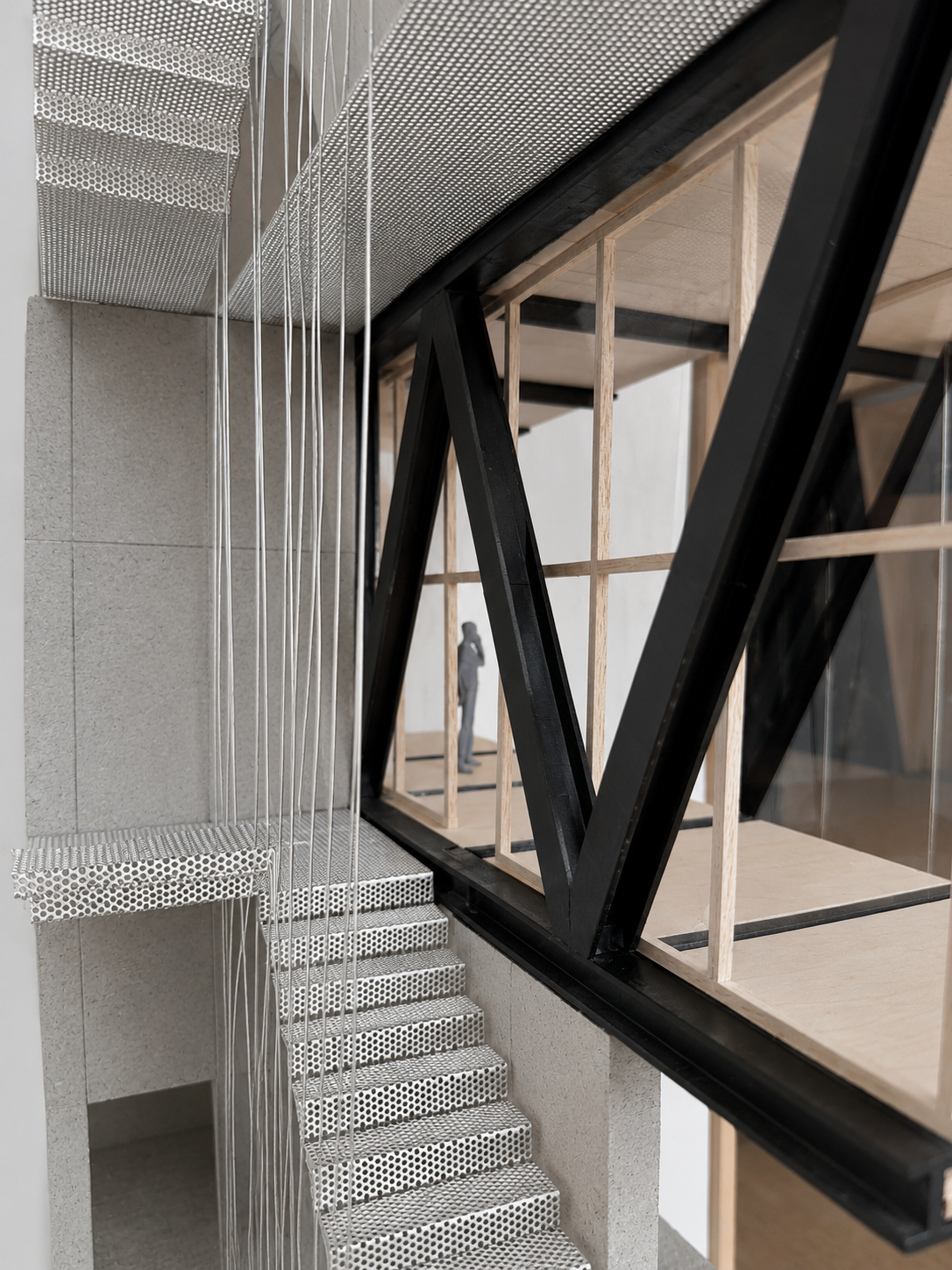
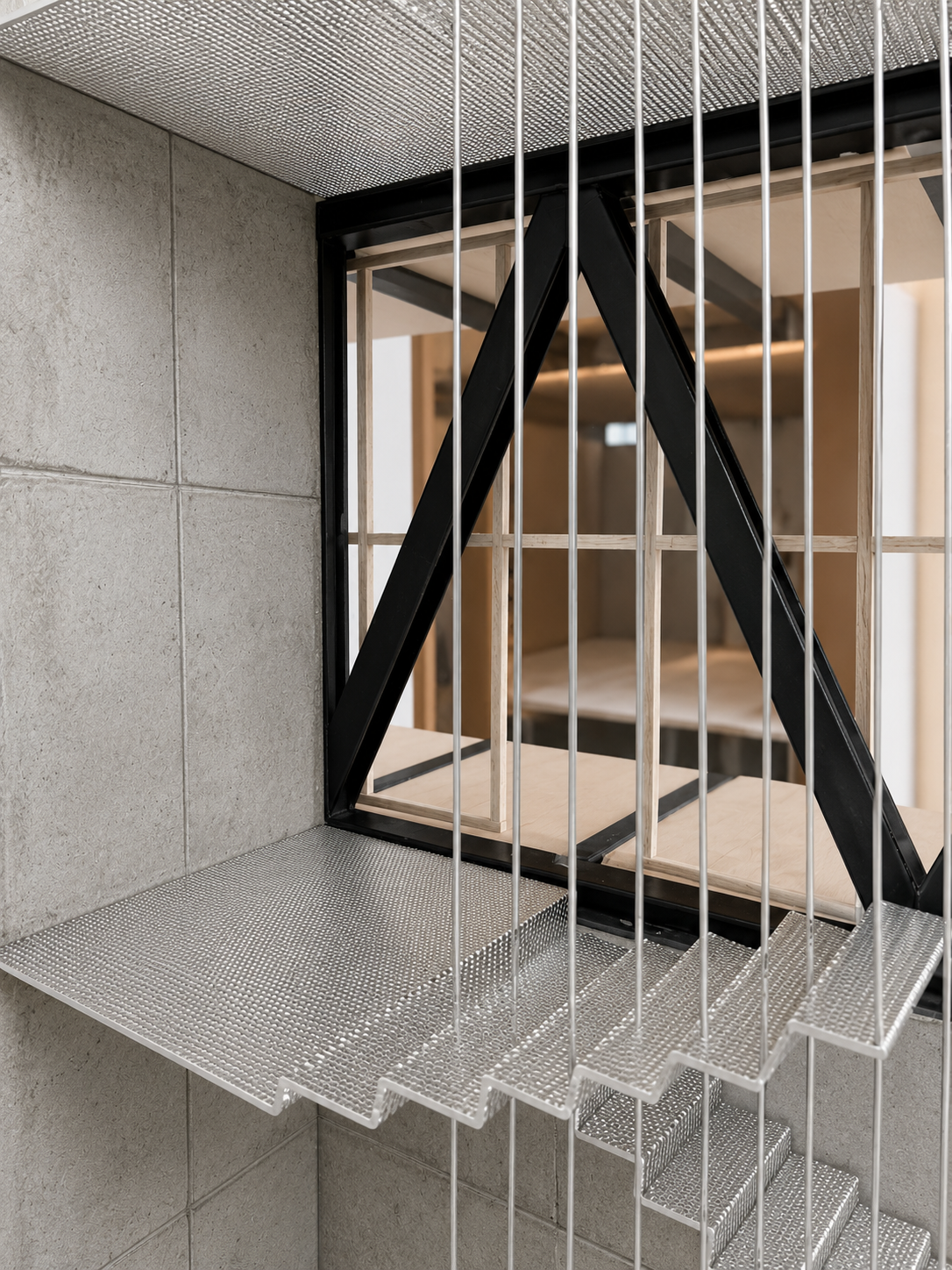
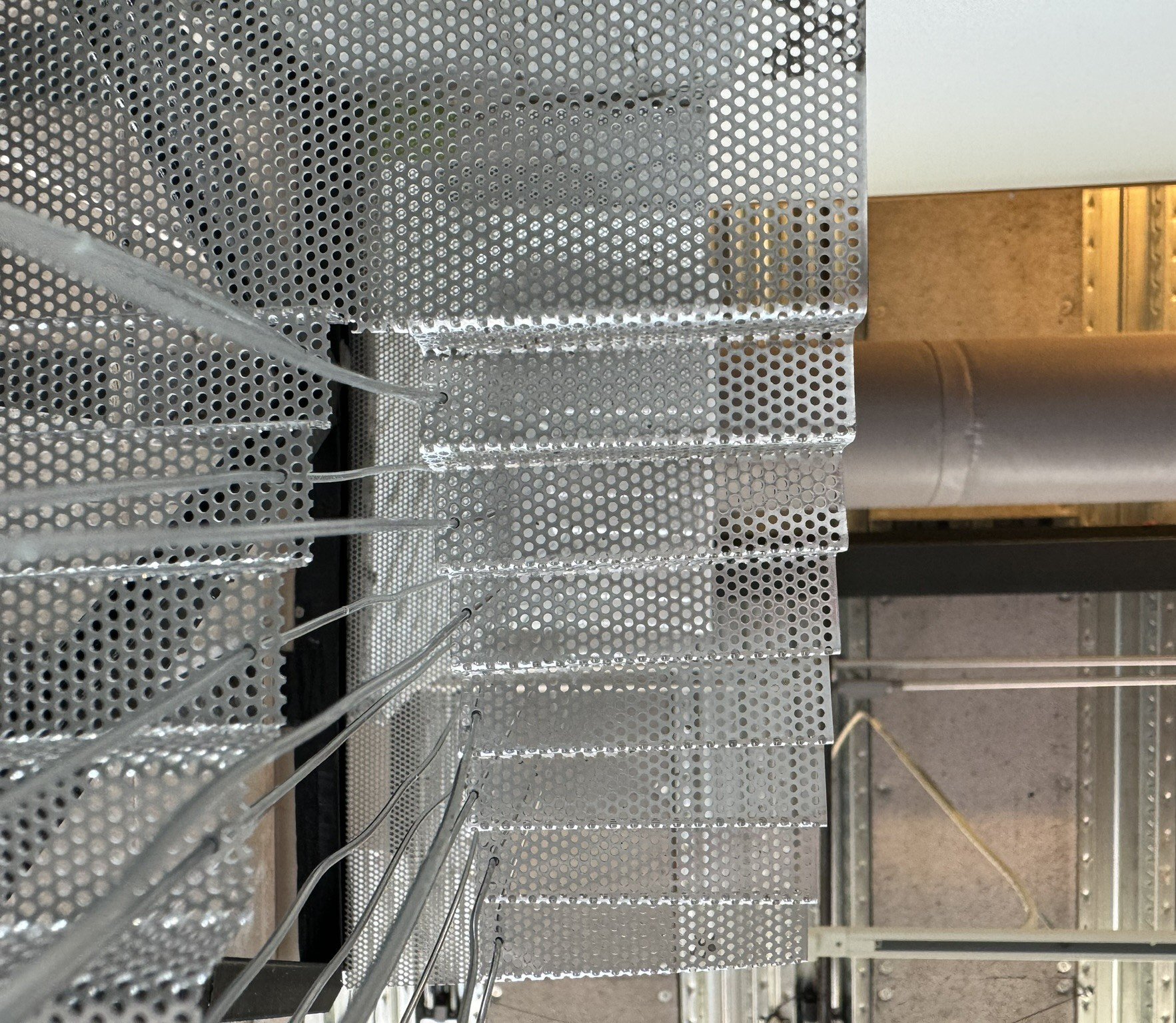
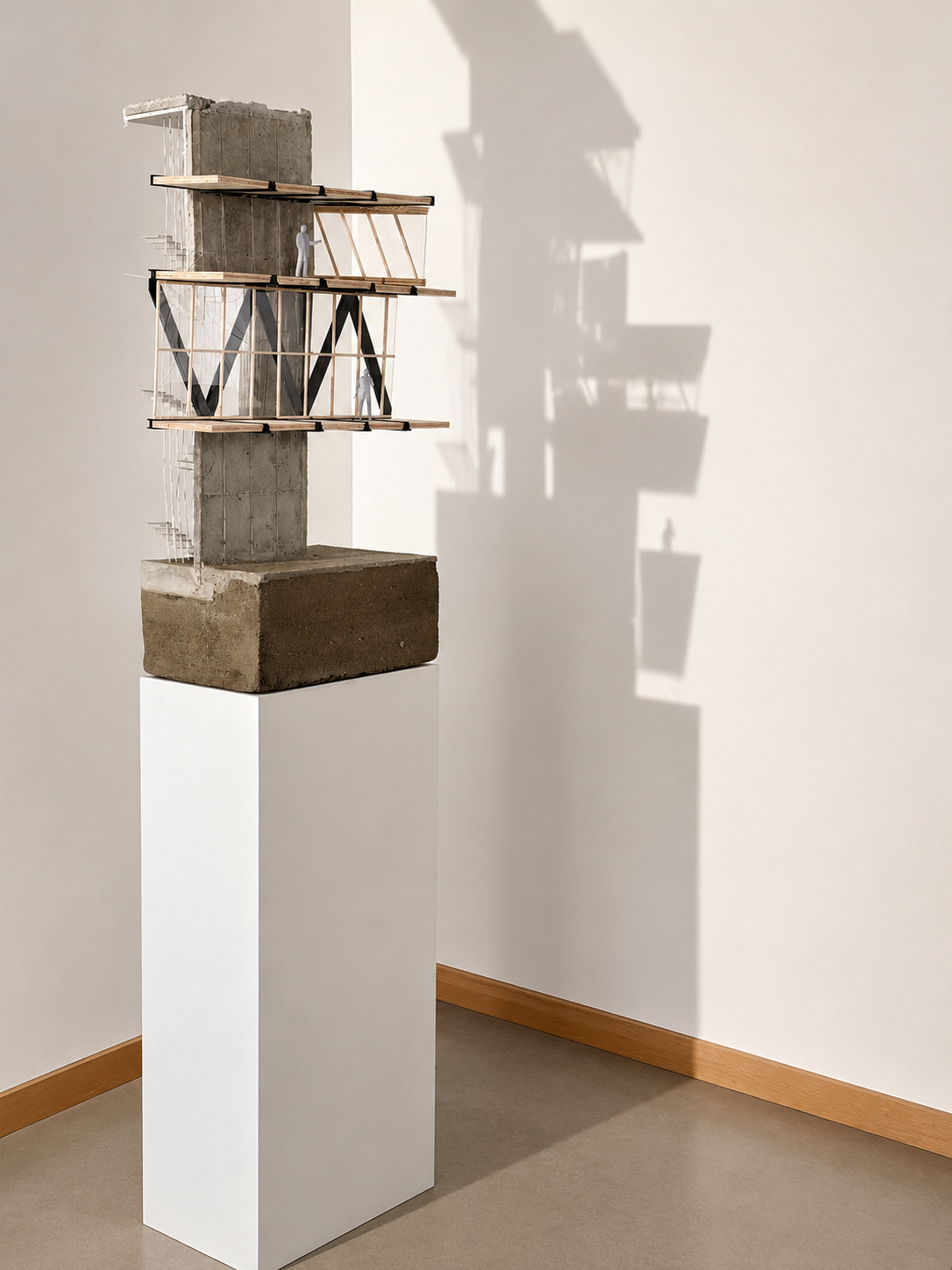
PHYSICAL MODEL
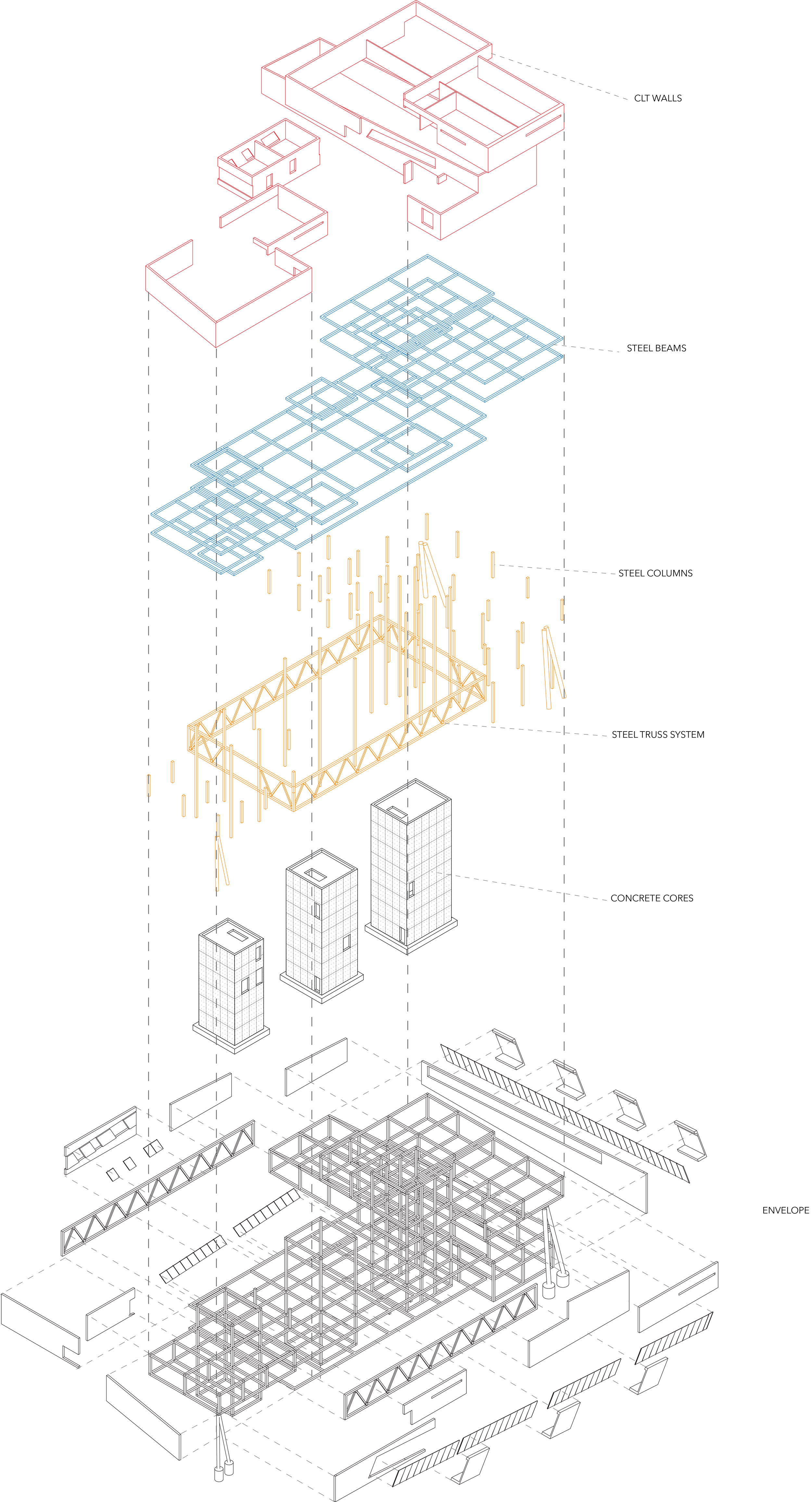
EXPLODED STRUCTURAL DIAGRAM
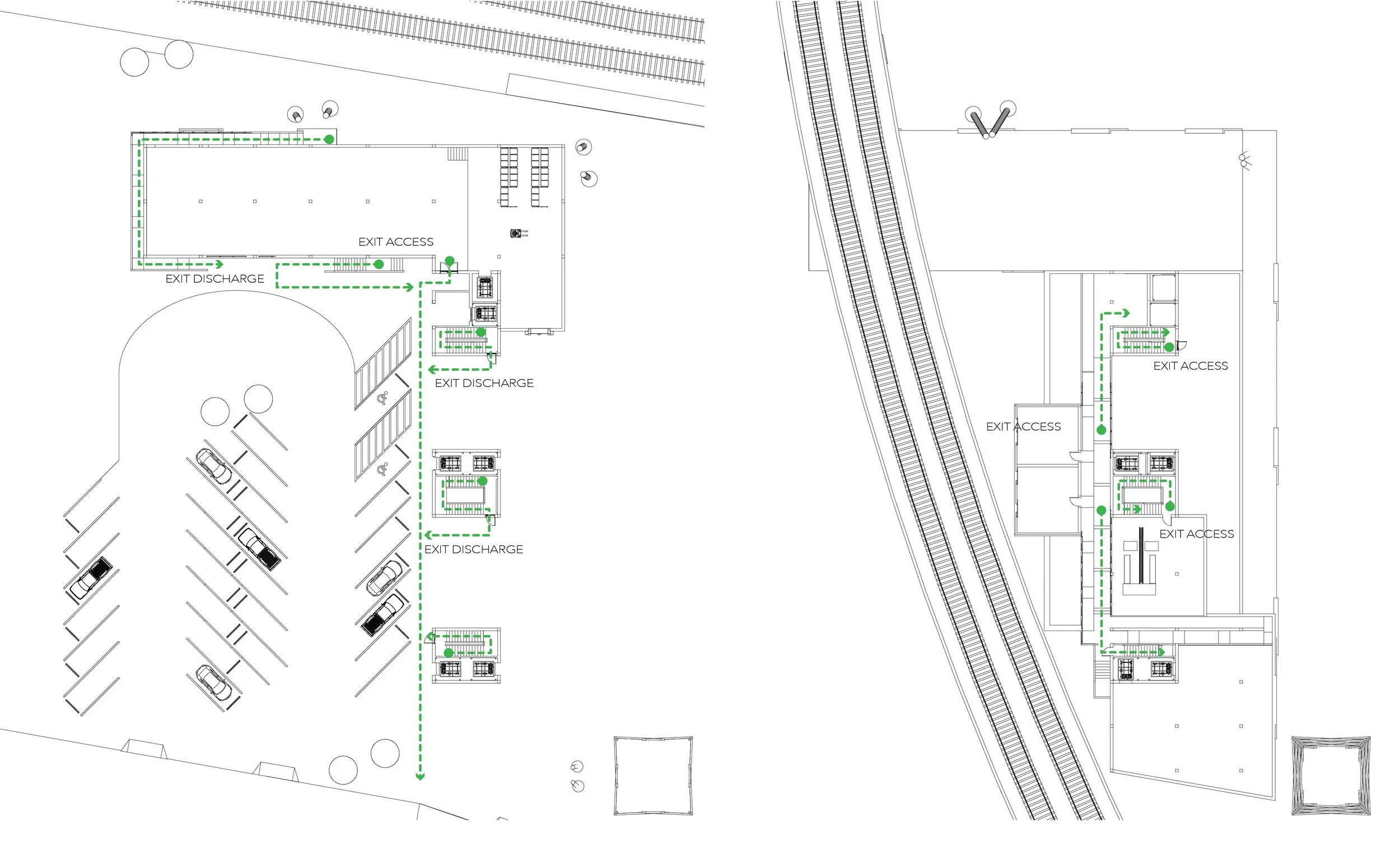
CIRCULATION DIAGRAM

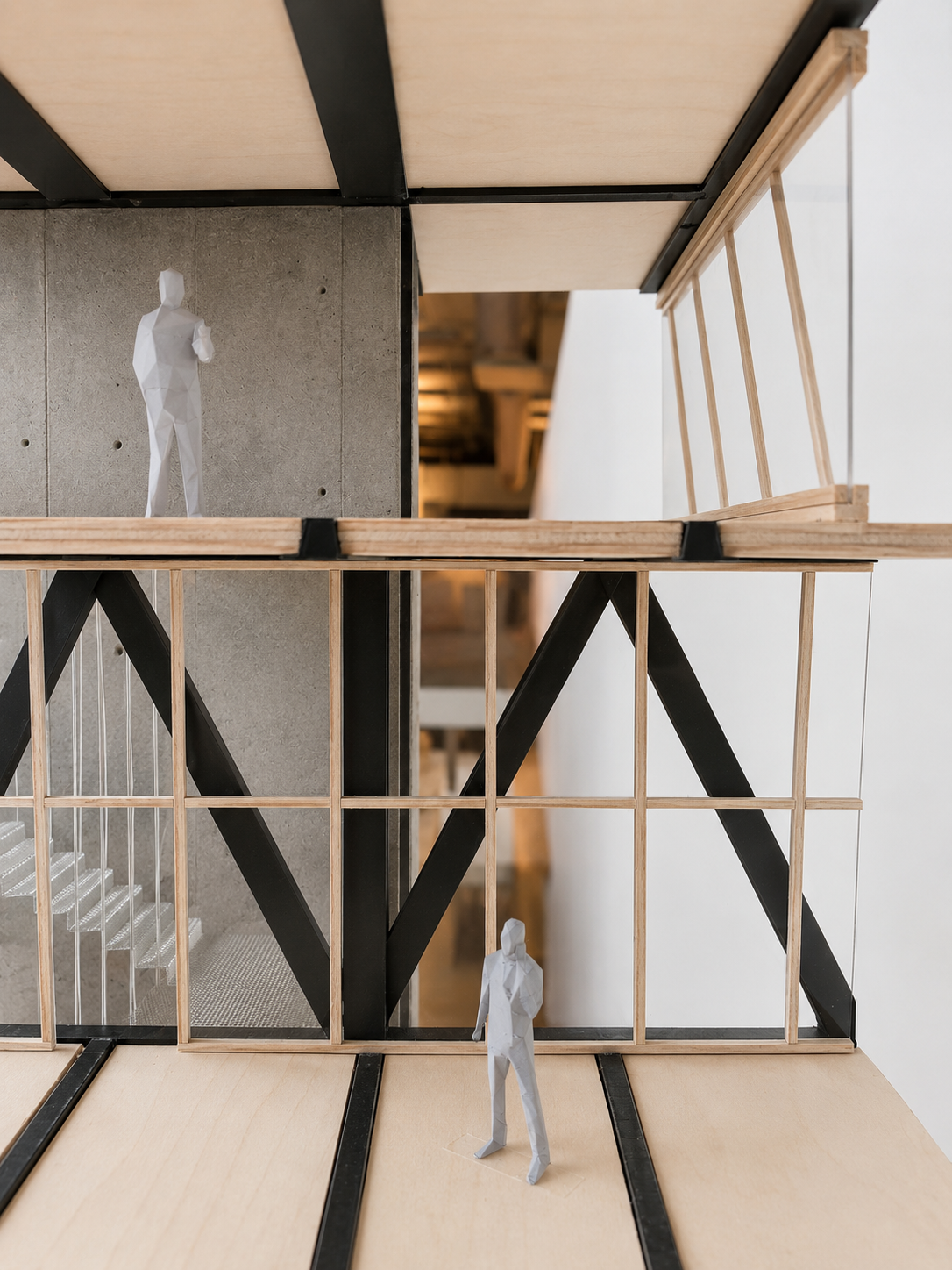
PHYSICAL MODEL